Part 2: How to Set Up a Drop Zone That Feels Calm and Actually Works
In Part 1, we looked at why entryway clutter feels so draining and how to plan a drop zone around the way your family really lives.
Now let’s bring it to life.
This is the part where your entrance starts working for you instead of against you.
The beauty of a good drop zone is that it does not need to be fancy. It just needs to be practical, easy to use, and gentle enough to support real life on busy days.
1. Start with hooks for the things that need an easy home
Hooks are one of the simplest tools, and honestly, one of the best.
They make it easy to walk in and put things away without effort. No cupboard doors. No folding. No piling things on a chair “just for now.”
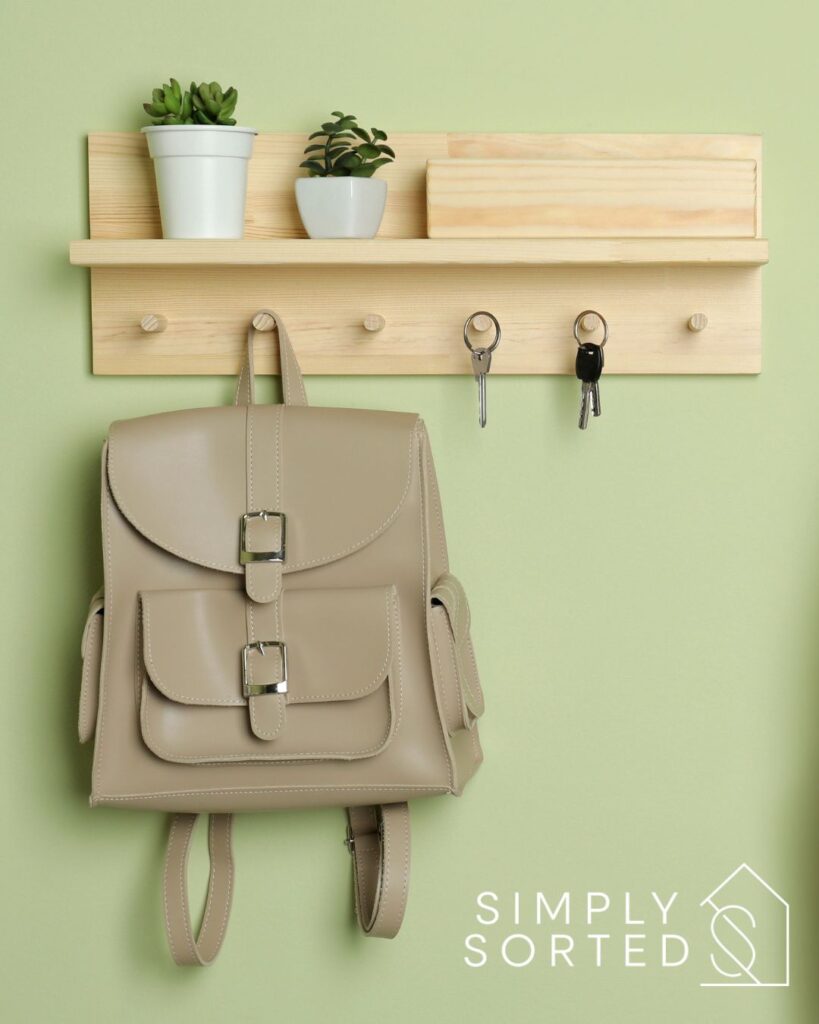
Hooks are perfect for jackets, bags, hats, dog leads, and lanyards. If you have children, adding a few lower hooks at their height is such a helpful shift. It gives them independence and makes it easier for them to be part of the routine.
It also cuts down on so much of the daily reminding.
2. Add a place to sit so shoes come off at the door
Shoes tend to wander when there is nowhere comfortable to stop and take them off.
A small bench, chair, or stool near the door creates a natural pause point. It quietly encourages shoes to come off right there, instead of being kicked off halfway down the passage.
This little pause also helps mark the transition from outside life to home life. It creates a moment to land from the busyness of life outside of home.
3. Use baskets or bins to hold the everyday overflow
This is where the visual calm really starts to happen.
Baskets and bins help contain all the things that would otherwise end up scattered around the entrance — shoes, sports gear, dog things, winter extras, and the bits and pieces of daily life.
If you can, give each family member a basket or a clearly defined spot. It makes tidying much quicker and removes the guesswork around where things belong.
Containment is what makes a drop zone feel settled.
4. Create one landing spot for the small important things
Keys, sunglasses, wallets, earbuds, lip balm. Small things, but they can cause a lot of stress when they go missing.
A tray or shallow bowl near the door gives these items one clear place to land.
It’s such a simple addition, but it changes the feel of your mornings. Instead of rushing around looking for keys or retracing your steps, you know exactly where to look.
That kind of certainty is more calming than people expect.
5. Give paper one home and keep the routine gentle
Paper is often the thing that makes an entrance feel instantly cluttered.
School notices, receipts, bills, courier slips, flyers. The problem with paper is not just the pile. It is the decisions attached to it. Keep it, toss it, sign it, file it, deal with it later.
The best thing you can do is give paper one home.
A simple tray, wall file, or labelled basket near your drop zone is enough. The key is consistency: all paper goes there first.
Then, a few times a week, do a quick sort. Recycle the junk, deal with anything urgent, and file what matters. It does not need to be a big tidy. A few gentle minutes goes a long way.
Add a “tomorrow” basket to make mornings feel lighter
If your mornings often feel rushed, this one small addition is a game changer.
Create a basket for anything that needs to leave the house the next day — library books, returns, forms, sports gear, borrowed items.
Instead of scrambling to find everything just before you leave, it is already waiting in one place.
It’s a small habit, but it gives you a much calmer start.
Keep it visually calm so it feels good to come home to
Because your drop zone is one of the first things you see when you walk in, it sets the tone.
It does not need to be styled perfectly, but a few thoughtful touches can make it feel softer and more welcoming. Matching baskets help the space feel less busy. Labels make it easier for everyone to use. A mirror can make a small entrance feel more open. A small plant or warm light can make the area feel cared for.
When a space feels nice to use, people are much more likely to keep using it and maintain it.
The small daily reset that keeps it all working
The final piece is not a big tidy-up. It is just a small reset at the end of the day because after all, life happens and items may still need to find their home.
A few minutes to hang jackets, put things back into baskets, clear the tray if it is overflowing, and place paper where it belongs.
That is all.
That tiny reset is what keeps the drop zone working, and it has such a ripple effect on the next morning.
A well-designed drop zone is a quiet kind of care. It creates less mess, yes, but also less overwhelm, less searching, fewer rushed moments, and a softer landing at the end of the day.
It helps your home feel like it is holding you, instead of asking more from you.
If you’d like help creating a drop zone that fits your space and your family rhythm, I’d love to help. At Simply Sorted, I set up real-life systems that are easy to maintain, so your home can feel calmer from the moment you walk through the door.
Because clutter doesn’t have to follow you in. You can stop it at the door.